Kitchen / Essentials & equipment
Kitchen essentials for small kitchens: what to buy first
Equip the meals you actually make. Start with useful cookware and prep tools, give them a place, then decide which appliances deserve the counter space.
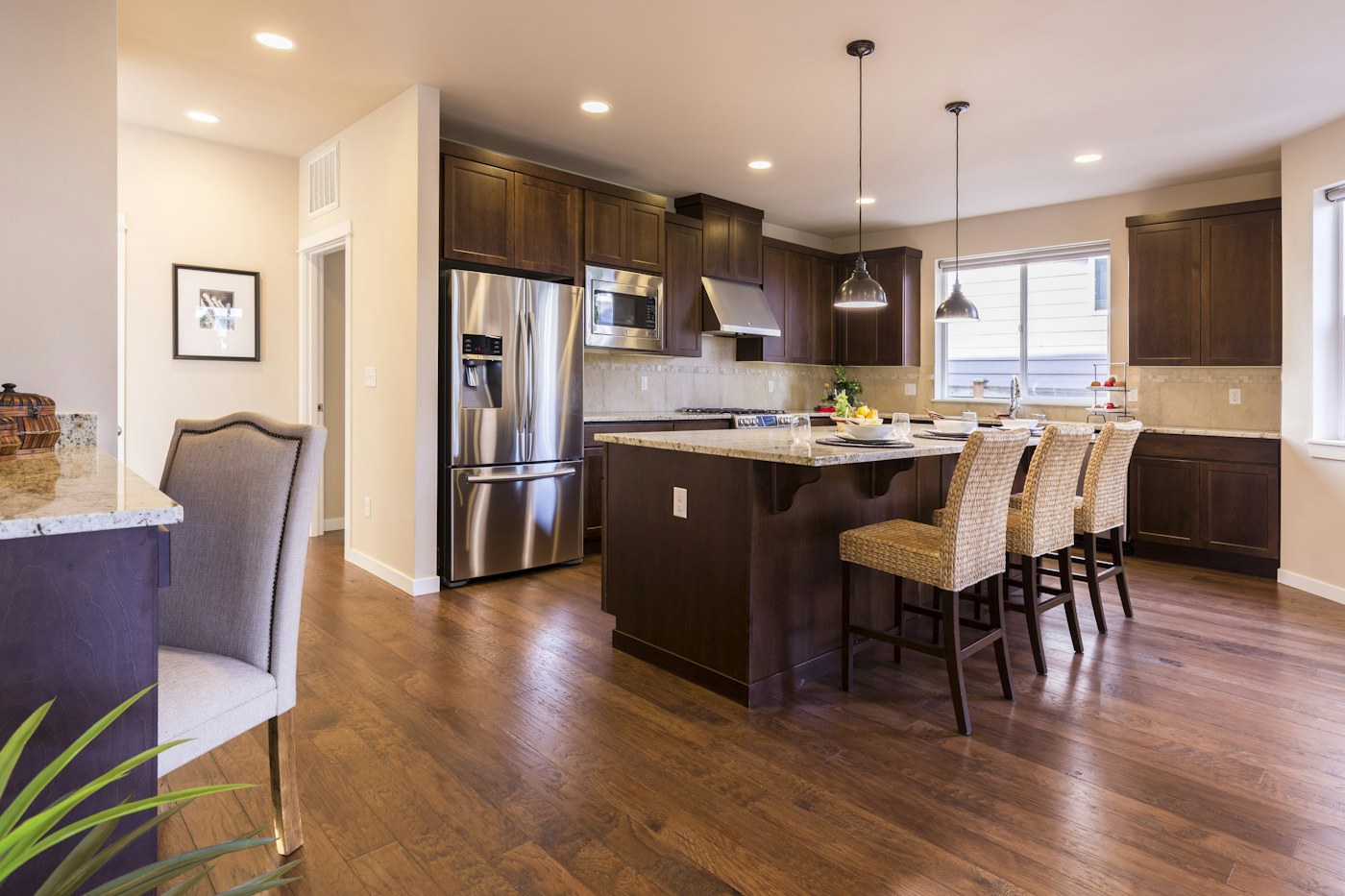
Illustrative interior, not a photograph of the recommended equipment · Photography credits
The short answer
Begin with suitable cutting tools and boards, a pan and pot that fit your meals, measuring tools, utensils, dishes and a few food-storage containers. Add equipment when a repeated task justifies it. A stand mixer, espresso machine or frozen-dessert maker is an optional upgrade, not a requirement for an equipped kitchen.
Start with five meals, not a large matching set
Write down five meals you prepare regularly, plus your normal breakfast and drinks. Next to each, note the equipment needed to cut, cook, serve and store it. Mark what you already own. This gives you a shopping list tied to your routine rather than a collection of attractive objects.
For example, a household making pasta, stir-fries and simple breakfasts may use one saucepan and one frying pan repeatedly. Someone baking bread or cooking larger batches will make different choices. These examples are starting points, not fixed equipment counts.
Record your cooktop type, oven space, cupboard openings and available work surface. If an item must be lifted out of a deep cabinet every day, consider that movement before buying. Our small-kitchen organization guide helps you plan the layout.
A practical small-kitchen equipment checklist
Use the groups below to check for missing functions. You do not need to replace a tool that already does the job. The Academy of Nutrition and Dietetics identifies many of these basic tool categories in its beginner-cook guide; the space checks and purchasing order here are our editorial recommendations.
| Equipment | The everyday job | Check before buying |
|---|---|---|
| Knife and cutting boards | Preparing ingredients. | Comfortable grip, enough working area and a practical storage place. |
| Frying or sauté pan | Cooking on the stovetop. | Cooktop compatibility, handle clearance and a size suited to your portions. |
| Saucepan or pot with lid | Boiling, simmering and making sauces. | Usable capacity, weight when full and room for the lid. |
| Mixing bowl and strainer | Mixing and draining. | Fit in the sink and cupboard; nesting shapes where useful. |
| Measuring cups and spoons | Following recipes. | Readable markings and units that match the recipes you use. |
| Spoon, turner and tongs | Stirring, lifting and serving. | Compatibility with the cookware and its care instructions. |
| Peeler, grater or can opener | Preparing the ingredients you buy. | Choose the tools your usual ingredients actually require. |
| Plates, bowls, cups and cutlery | Serving and eating. | Household size, washing routine and the shelf space available. |
| Food-storage containers | Packing and organizing leftovers. | Portion size, lids, stacking and the stated temperature limits. |
| Washing-up tools and drying space | Cleaning and returning equipment. | A clear route to the sink and somewhere for wet items to dry. |
Add ovenware, a whisk, a kitchen scale or other tools when your recipes call for them. Include suitable oven mitts or pot holders for handling hot cookware. Keep the instructions for equipment with special care requirements; similar-looking materials do not necessarily have the same limits.
What should you buy first?
Our suggested order is to remove the obstacles to everyday cooking before buying convenience upgrades. It is not a price ranking and does not depend on a particular brand.
- Fill a basic gap. Replace missing or unsuitable equipment that prevents you preparing your normal meals.
- Make the routine manageable. Add enough dishes, washing-up space and storage to handle a normal day.
- Solve a repeated inconvenience. Buy a second pan, an organizer or another tool after identifying the task it improves.
- Consider a specialist appliance. Make room for it only when the preparation, cleaning and storage fit your habits.
If your budget is limited, mark each purchase “needed now,” “useful later” or “optional.” Compare the price of the pieces you will use with the price of a set. IKEA’s cookware guide also recommends building a basic selection and adding pieces as needs emerge. A large set is worthwhile only if its useful pieces, compatibility and storage suit you.
Make storage work before adding more equipment
Keep the preparation area available
Leave room for your board, ingredients and a bowl beside the cooking area. An appliance can fit on the counter while leaving the kitchen awkward to use. Test its footprint with paper, then lay out the tools for one of your usual meals around it.
Fit the drawer to the tools
Sort utensils before choosing compartments. Check the inside dimensions and the space beneath the frame above the drawer. Use our drawer-divider measuring guide before ordering organizers.
Buy containers for the quantities you store
Try a few containers before converting the whole pantry. Check how you will refill, label and lift them. Our pantry-container guide explains the planning steps.
Keep the sink area accessible
Make space for washing up without crowding the cupboard below. Measure around pipes and valves before adding a shelf or pull-out unit. See our under-sink storage guide for a fit checklist.
Which countertop appliances are worth considering?
Choose by the job, not by how expensive the machine is. Before considering an upgrade, write down when you will use it, where it will operate and where its accessories will go. The guides below contain more detailed comparisons and paid Amazon links.
A final fit check before you order
- Job: name the meal or repeated task it will help with.
- Space: check working clearance as well as storage dimensions.
- Compatibility: verify cooktop, oven or electrical requirements for the exact product.
- Upkeep: allow for washing, drying, replacement parts and accessories.
- Purchase terms: compare the exact configuration, delivery and returns.
Common questions
What do I need for a first apartment kitchen?
Start with the equipment needed for a few meals you know how to cook, plus dishes and a cleaning routine. Use the checklist to spot gaps. If a rental already includes suitable equipment, count it before shopping.
Should I buy a cookware set or separate pieces?
Compare the pieces you will actually use. Individual purchases let you choose sizes around your meals and cupboards. A set may work if every useful piece fits your cooktop, storage and budget; the number on the box is not enough to decide.
Do I need premium appliances to equip a kitchen?
No. Specialist machines belong later in the decision, once everyday cooking and storage work. Our appliance comparisons are options for specific routines, not a requirement to buy everything.
Is this a tested ranking of the best kitchen equipment?
This is a planning guide, not a laboratory ranking. We explain practical selection criteria and link to model-specific research where appropriate. For measured performance, look for independent tests of the exact model.
Sources and editorial approach
References checked October 21, 2026. This guide’s meal-first exercise, purchasing stages and space checks are Dasynco Home’s editorial framework.
- Academy of Nutrition and Dietetics: essential tools for beginner cooks — background on basic preparation tools and cookware categories.
- IKEA US: a guide to buying pots and pans — building a basic cookware selection and expanding it around your needs.
For product-specific sources, see the linked appliance guides. Read how we select products and disclose affiliate links.